
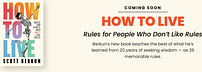

Reminder: tune in Wednesday at 12pm PST for a live philosophy lesson from the new book!
American culture teaches us to admire and emulate high achievers. The problem is that many high achievers are miserable! Not all of them of course, but more than we admit. I can explain why with a story about a friend I used to know named Jay.
Jay looked at himself in the mirror compulsively. If he walked by any reflective surface, like a car window facing the sidewalk, he would tilt his head just enough to catch a glimpse of his own reflection. It was a predictable and amusing quirk of his personality. I doubt he knew that we all noticed it, but it was hard not to!
Someone like Jay required a lot of external validation. Without constant reminders that he was okay, he didn’t feel very good. His baseline experience of life was insecure, motivating him to chase security by obsessing about his appearance.
Forms of external validation include:
Money
Fame
Beauty
Status
These kinds of validation are compelling to people with low self-esteem because they are easy to measure and highly visible. Much like Jay and his reflections, external validation doesn’t have to be explained, which is why it can be so powerful. It’s obvious to everyone if you have the biggest house or the fanciest car. And the myth we’re told in American culture is that if you can get these things, all your other problems disappear.
The obvious flaw here is that we are not our external lives. We have souls (well, most of us do) and interiors that only we experience. We’re alone in a way inside ourselves living the deeper truth of who we are and how we feel. Or, too often, denying and avoiding what’s in there by chasing the shiny surfaces of external validation.
Internal validation includes:
Feeling at peace
Being fulfilled
Accepting and appreciating who you really are
These sound great. We all want them. Yet compared to the simple measures of external validation, the internal kind is a mystery. To get it we we have to honestly look inside, at our wounds and weaknesses, which can be terrifying. External validation feels much safer to chase, so we do.
And Americans are prone to asking, how can I prove I have an internal achievement to someone else? Which is about as backward a question as there can be. This is why we do so much virtue signaling here (do you need to put your cross on the outside of your shirt if you behave as kindly as Jesus did?), wanting to inform other people about our supposed internal qualities. The goal of life isn’t to prove something to someone else, but to actually live well.
I am a recovering high achiever, and I know why some people are so driven to win. If they were truly confident and loved themselves, winning couldn’t be so important. They’d have less to prove. This tells us something about who competes at the highest levels of business, politics and culture. There’s something deep down driving them that likely doesn’t come from a healthy place.
In American culture we prioritize a certain kind of success. It isn’t the people who are great parents or community leaders. And it isn’t the essential workers, who do the jobs we really depend on. The people we most admire are those who win at the most obvious and visible games of life: obtaining wealth and fame. We’re taught to believe that becoming wealthy and famous will solve all our other problems. It’s among the most enduring and powerful myths of American culture, and it’s a shame.
I want a world where we value most the people who learn to live with peace, fulfillment, and joy, and who help others find it too. We have plenty of them around, but we often forget to see them. They’re rarely seeking attention because they don’t need much from other people to feel good about their lives.
I've identified this in myself and have been working to change it. It comes up in my creative life, where I always feel terrible and empty that I spend hours and hours on a song and no one listens to it. I'm trying to make having the song, for myself, the goal. In fact, I've been trying a technique where I start out thinking "I'm going to write/record this song and I promise I will _not_ show it to anyone".
Some extra external validation for you: I really like the message in this post.
Thanks for sharing. 🙌